 Foctok
 Questions
The things investors ask first.
Including the uncomfortable ones. If your question is not here, it is a good question - send it and we will answer it directly.
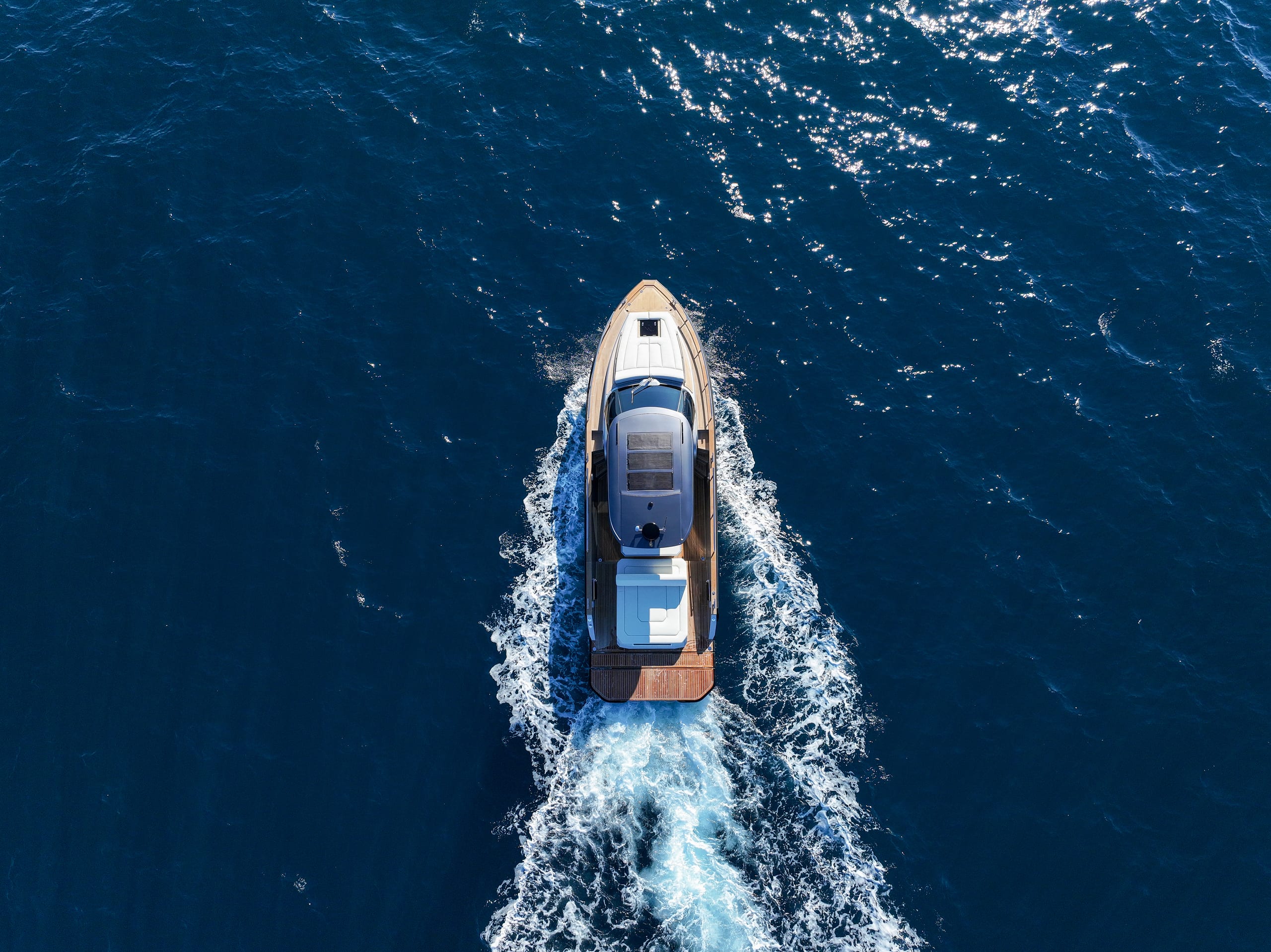
A security token representing 1% of the value of a Cyprus limited company. That company's assets are six Focus Forza 37 motoryachts and the charter contracts they operate under. One hundred tokens exist; each is priced at €33,000, valuing the company at €3,300,000.
You are not buying a fractional share in a specific hull, and you are not buying a utility token or a cryptocurrency. You are buying equity exposure to a single-purpose company, recorded on a token rather than in a paper share register.
Eighty-five tokens are issued for cash, raising €2,805,000. Focus shipyard subscribes for ten of those eighty-five at €330,000. That leaves 75 tokens - €2,475,000 - available to outside investors.
The remaining fifteen tokens go to management and administration and are paid for in kind rather than in cash: the €495,000 five-year programme of maintenance, marketing and administration. No management fee is drawn against charter revenue on top of that.
Each operating year, the company uses part of its net charter income to buy back and permanently retire 10% of outstanding tokens. Two things follow. Holders who sell into the buy-back get capital out early, without needing a secondary market to exist. Holders who stay see their percentage claim on the same six hulls rise, because the denominator shrank.
The alternative - locking every euro until a single year-six liquidity event - would mean a six-year hold with no return of capital at all. The burn is what makes the position a yielding instrument rather than a bet on one exit.
The annual buy-back is the primary designed exit route, and it is available every operating year. Transfers to third parties are possible subject to the company's transfer provisions and applicable securities rules - the definitive terms are in the offering documents.
What you should not assume is a liquid public market. Treat this as an illiquid six-year position with a scheduled annual redemption window, and size it accordingly.
Because a single model collapses the operating complexity. One spare-parts inventory covers four continents. One maintenance protocol, one crew familiarisation standard, one insurance specification, one set of marketing assets. A six-hull order in one model is also what unlocked the 25% discount - a mixed fleet would not have.
The trade-off is concentration: if the Forza 37 proves unpopular in a specific market, all six vessels share that exposure. Deploying across four separate markets is the deliberate offset.
Established local charter operators, one per market, under charter-management agreements. They hold the local licences, carry the booking book, roster skippers and handle guests. The commercial structure is the industry-standard 80/20 split of vessel rental in the owner's favour, with the client paying skipper, fuel, VAT and extras separately.
Foctok itself is a holding and asset-management vehicle. It does not employ crew or sell charters directly, which is precisely why holders receive distributions rather than operating headaches.
Distributions compress first. Fifty days per vessel is the pessimistic scenario, not the base case, and it still models a positive total return - but it is a projection, and a genuine shortfall below it would reduce annual payouts and could slow the token burn.
What it does not immediately touch is the asset base. The vessels were bought at a 25% discount, are maintained on a funded programme, and carry an assumed year-six disposal of €1,800,000 - half the fleet's list value. Under-utilisation damages the yield component well before it damages the asset component - which is the point of anchoring the structure to hulls in the first place.
Utilisation risk. Revenue depends on third-party operators selling charter days in four separate markets. An underperforming operator costs a season while being replaced.
Resale risk. The year-six disposal is the single largest component of total return. A used-boat market that will not support an €1,800,000 fleet sale reduces it directly.
Liquidity risk. There is no public market. Your exit is the annual buy-back or a permitted transfer.
Concentration risk. Six vessels, one model, one shipyard, one SPV. Diversification is by geography only.
Regulatory and tax risk. Cyprus tax treatment, the EU framework for tokenized securities, and the Regulation 6.2 residency criteria can all change during a six-year hold.
Operational risk. Weather, casualty, marine incident and insurance response are inherent to chartering boats. Insurance mitigates but does not eliminate lost season days.
€1,900 is Foctok's net share after the operator's 20%, which implies a gross day rate around €2,375. Public listings for this exact hull run from €1,600 bareboat in the Croatian shoulder season to €3,480 crewed on the French Riviera. The crewed Mediterranean listings clear the assumption comfortably; the Adriatic bareboat rate sits below it.
That spread is why only one of six vessels is allocated to the Adriatic and why the model blends four markets instead of extrapolating from the best one. The full benchmark table, with sources, is on the fleet page.
No. The Regulation 6.2 threshold is met at ten foctokens - €330,000. A smaller position is a purely financial investment with no immigration consequence.
Above that threshold the status is permanent, covers spouse and dependent children, needs no relocation, and requires one visit to Cyprus every two years. Eligibility still depends on your own nationality and circumstances and is determined by the Cypriot authorities, not by Foctok.
Yes, on holder terms through the local operator, and more broadly across the Focus yacht club network rather than only the six Foctok hulls. It is a membership benefit, not a guaranteed usage right.
The honest caveat: a vessel booked by a paying client is a vessel earning for the fleet, so charter revenue takes priority over holder use in peak weeks. Booking windows and any applicable charges are in the membership documentation.
Target close for subscriptions is December 1st 2026, after which the SPV is capitalised, the fleet order is placed and vessels are delivered to their markets ahead of their respective seasons.
Registering interest is not a commitment. It puts you on the distribution list for the full information pack - the Cyprus structure memorandum, the draft operator agreements, the maintenance schedule and the underlying rate research - and gets you a direct conversation with Vuk Mirković. Subscription happens only later, on the definitive offering documents.
Still unanswered
Ask the question that isn't on this page.
Use the message field on the interest form, or email directly. Detailed questions get detailed answers - usually within one business day.